
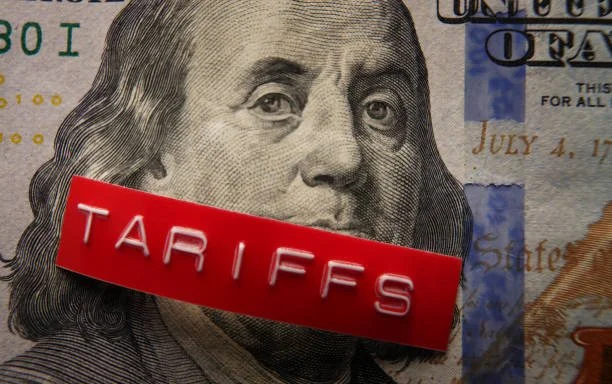
Working Paper #001 - Tariff Shocks and FUDflation: Testing the Disconnect Between Firm Costs and Consumer Prices
Research Abstract: The phrase “Economists agree that tariffs cause inflation” has echoed across headlines, but this claim warrants closer scrutiny. Guided by the Russian proverb trust, but verify, this research examines the relationship between tariffs and inflation in the United States through a two-part empirical analysis. First, it applies Granger causality and time series methods to more than a century of macroeconomic data, from 1913 to 2024, to test whether changes in tariff rates predict movements in CPI inflation. Second, it uses a Difference in Differences framework on the 2018 US–China tariffs to assess how tariff passthrough varies by product-level demand elasticity and firm pricing power. This study finds overall tariffs have a deflationary effect on the American economy. This study also names a behavioral pneumonia and introduces it as the concept of FUDflation: a price distortion driven not by actual tariff costs, but by the Fear, Uncertainty, and Doubt surrounding them. Firms in concentrated markets appear to raise prices on inelastic goods in anticipation of tariffs, while elastic goods show no comparable response. These findings suggest a disconnect between firm level cost shocks and consumer level price outcomes, driven more by expectations than expenses. By challenging standard trade models such as Heckscher–Ohlin and Ricardian theory, this research offers a behaviorally grounded framework for understanding tariff induced price dynamics, with direct implications for how the Federal Reserve interprets and responds to trade policy shocks.